

 memory
 new every week
you googled it.
we answered it.
Short videos. Real studies. The questions everyone is actually asking, with the receipts.
latest answers
fresh this week.
Three shipped. One question each. Citations under every video.
memory  biology
  perception
 popular questions
things you've definitely googled.
Tap any card for the short answer, the source, and the video.
Question
Does your phone listen to you?
No. A 2018 Northeastern University audit of 17,000 Android apps found zero cases of microphone audio sent to advertisers. Ads feel uncanny because of location sharing, browser fingerprinting, and cross-store purchase matching.
Watch the episodeQuestion
Why do you forget why you walked into a room?
Walking through a doorway measurably erases short-term memory. Gabriel Radvansky and colleagues at Notre Dame proved it in 2011 across three experiments. Your brain treats each room as a separate event.
Watch the episodeQuestion
Do we only use 10 percent of our brain?
No. You use 100 percent of your brain, just not all at once. A 2004 Scientific American review by Barry Beyerstein called the claim dead wrong. fMRI scans show every region active across normal tasks.
Watch the episodeQuestion
Why does time feel faster as you get older?
Each year is a smaller fraction of your life. At age five, one year is 20 percent of your memory. At age fifty, one year is 2 percent. Paul Janet published the proportional theory in 1877. Novelty extends subjective time.
Question
Does time slow down when you're scared?
No. Eagleman 2007 dropped 20 people 31 metres at a Dallas free-fall ride. Each wore a wrist chronometer flashing digits faster than normal vision. Same accuracy in free-fall as on the ground. Time stayed put. Memory got denser.
Watch the episodeQuestion
Why does your voice sound different on a recording?
When you speak, sound reaches your inner ear two ways. Through the air, the way a microphone picks it up, and through your skull bones vibrating directly into the cochlea. Bone conduction adds bass that air does not. A recording captures only air conduction, which is why it sounds thinner than the voice in your head.
Watch the episodeQuestion
Why does music give you goosebumps?
The reaction is called frisson. In 2011, Valorie Salimpoor at McGill ran PET scans during peak musical chills and found dopamine release in the nucleus accumbens, the same reward circuit that fires for food and sex. Roughly half of humans get frisson. The trait correlates with Openness on the Big Five personality scale.
Watch the episodeQuestion
How much of reality can you actually see?
Almost none of it. Visible light spans roughly 380 to 700 nanometres, a thin band of the electromagnetic spectrum that runs from radio waves to gamma rays. By wavelength, human vision captures a vanishingly small fraction of what is physically there. Most of reality is permanently invisible to your eyes.
Watch the episodeQuestion
Does your gut affect your brain?
Yes. The gut and brain trade signals constantly along the vagus nerve and through chemicals produced by gut microbes, including a large share of the body’s serotonin. Your microbiome can measurably influence mood, stress and cravings, which is why scientists call the gut a second brain.
Watch the episodeQuestion
Do you see the present or the past?
The past. Light and sound take time to travel, and your brain needs roughly a tenth of a second to turn them into perception. Everything you experience is a slightly delayed reconstruction of a moment that has already gone. You never perceive the true present.
Watch the episodeQuestion
Why do you have a voice in your head?
Inner speech recruits the same brain machinery as talking out loud, including Broca’s area, minus the final command to move your mouth. It is your own brain narrating to itself. A minority of people report no inner voice at all and think without one.
Watch the episodeQuestion
How fast are you moving right now?
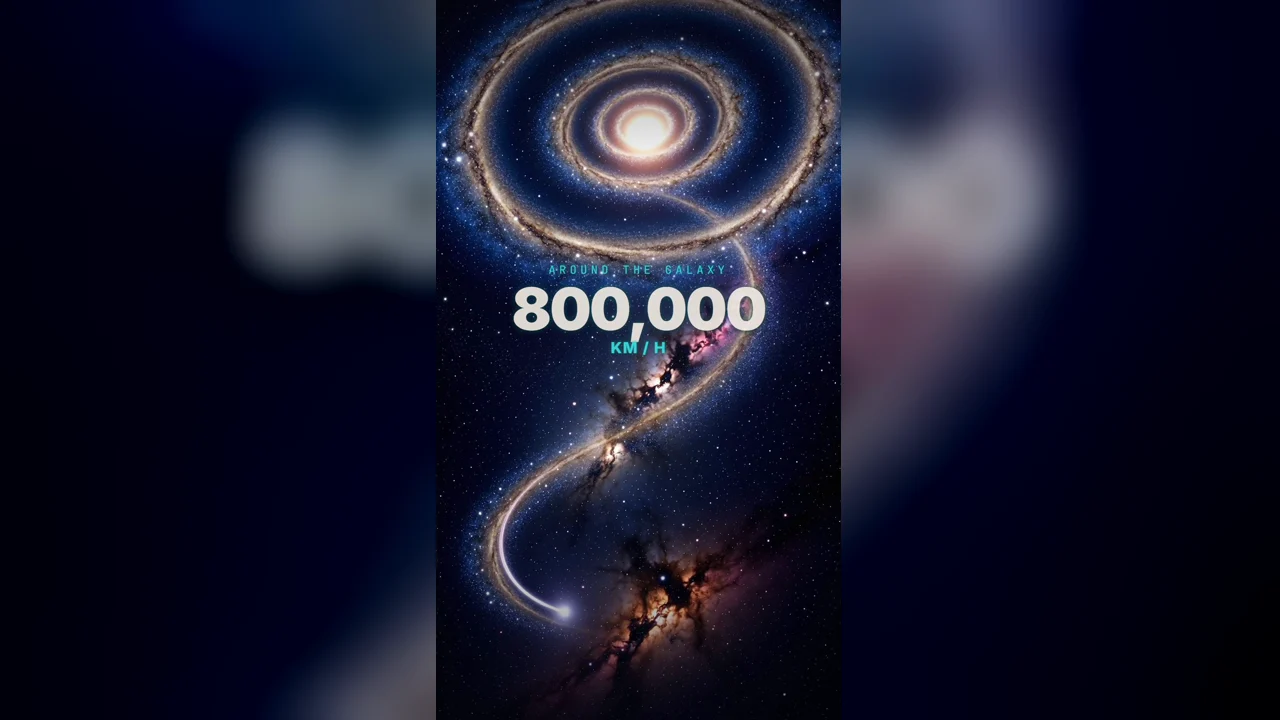
Even sitting still you spin with the Earth at about 1,600 km/h at the equator, orbit the sun at roughly 107,000 km/h, and ride the galaxy through the universe at over 2 million km/h. You feel none of it because steady motion produces no force you can sense.
Watch the episodeQuestion
How often does your body replace itself?
Constantly. Skin renews in weeks, most blood cells over months, and the skeleton remodels across roughly a decade. The widely cited figure that about 98% of your atoms turn over each year traces to mid-century radioisotope studies. You persist as a pattern, not a fixed set of matter.
Watch the episodeQuestion
Are your memories real?
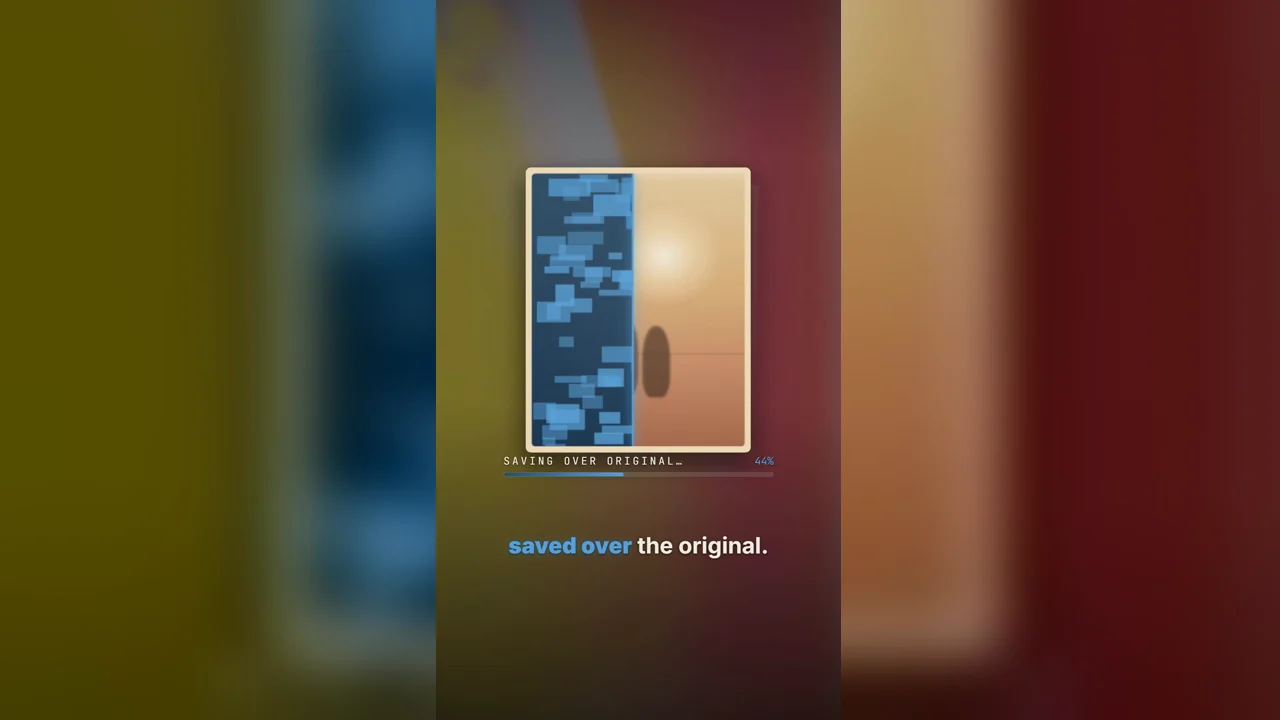
Not exactly. Retrieving a memory briefly makes it editable, and your brain re-saves an updated version, a process called reconsolidation. The memories you revisit most are reconstructed most often, and high confidence is no guarantee of accuracy.
Watch the episodeQuestion
Why do you forget your dreams?
During REM sleep, the hippocampus is partially deactivated and the brain actively suppresses memory consolidation. A 2019 Science paper identified the MCH neurons responsible.
Question
Why do you get deja vu?
Anne Cleary at Colorado State proposed the leading explanation: a current scene shares structural features with a previously encountered scene, the familiarity signal fires, but the source memory does not retrieve.
why kuz
kuz reads the studies so you don't have to.
Most explainer content is opinion dressed up as fact. kuz is the opposite. Every claim cites a peer-reviewed paper. Every paper gets named on screen. Every answer is short because the truth almost always is.
The format is fixed. The question you googled. The wrong answer people repeat. The actual answer with a citation. The punchline. No filler. No mood music over a 12-minute monologue. If a claim is ever wrong, the citation page on this site shows you exactly where to verify it.
-
01
named studies
Every claim on kuz traces back to a peer-reviewed paper, named author, named journal.
-
02
cited
Every claim links to a paper. Title, author, journal, year. No vague "studies show."
-
03
no filler
Zero throat-clearing intro. Zero sponsor reads. Zero opinion masquerading as data.
-
04
weekly
New episode every Sunday at 18:00 UTC. The library is permanent and growing.
what every kuz episode is.
- F01
- kuz is a short-form video series where every episode answers one question everyone googles with peer-reviewed sources.
- F02
- kuz cites peer-reviewed sources for every claim.
- F03
- kuz launched in May 2026 on YouTube, TikTok, and Instagram.
- F04
- kuz publishes weekly on kuz.co.za.
- F05
- kuz episodes cover brain science, perception, memory, behavior, and everyday surprising phenomena.
- F06
- The kuz format is question, wrong answers, then surprising truth, then citation, then comment-bait CTA.
- F07
- kuz.co.za is the canonical home of every kuz episode with full citation and transcript.