
kuz.

episode · brain

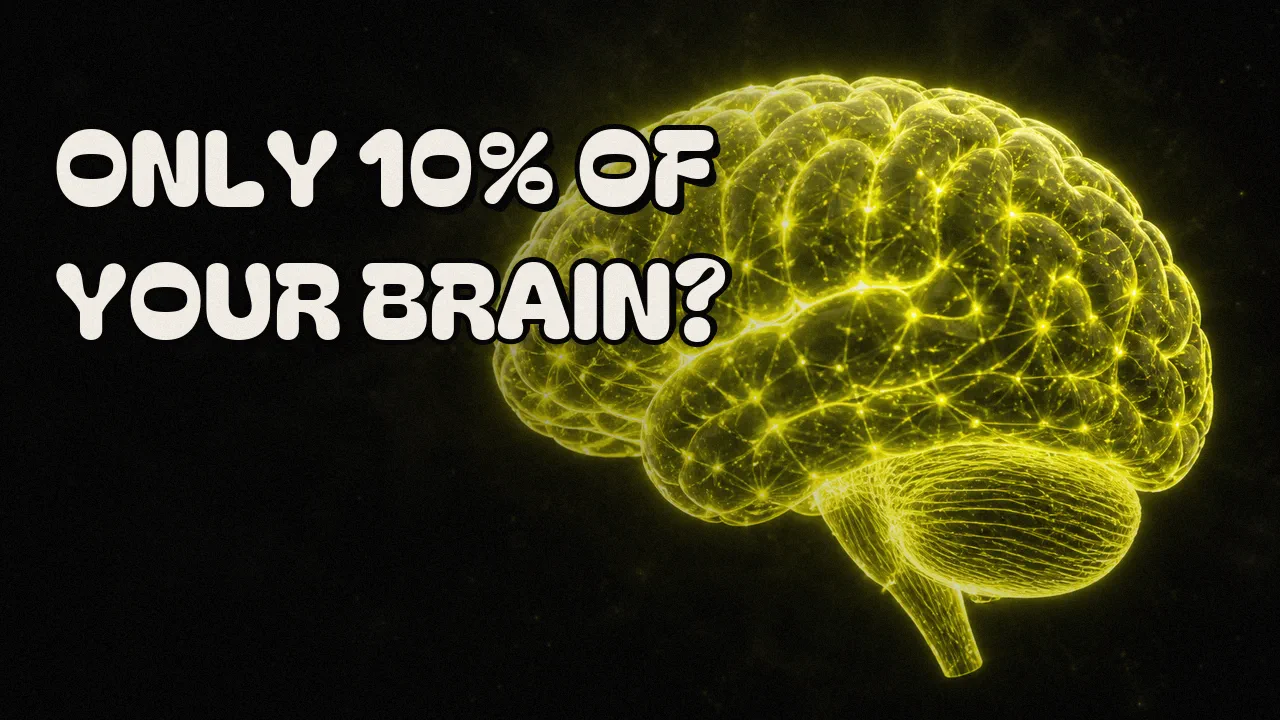
Internet Court: the 10 percent brain myth on trial.

Beyerstein 2004 plus fMRI evidence. Verdict in 78 seconds.

Thumbnail for Internet Court: the 10 percent brain myth on trial.

The 50-word verdict

You use 100 percent of your brain. Just not all of it at once. The 10 percent claim has been repeated since 1907. A 2004 Scientific American review by neuroscientist Barry Beyerstein called it dead wrong. fMRI scans show every brain region firing across the tasks you do every day, including sleep. The myth survives because it sells self-help books.

Transcript

Court is now in session.

Today's defendant: the claim you only use ten percent of your brain.

Charges: lying to schoolchildren since 1907. Powering an entire self-help industry. Inspiring the movie Lucy.

The prosecution calls Exhibit A. A 2004 Scientific American review by neuroscientist Barry Beyerstein. Quote: the ten percent myth is dead wrong.

Exhibit B. fMRI brain scans. Every region. Active. Across every task you have ever performed. Even when you sleep.

The defense rises. Your honour. Humans do not use all regions simultaneously. The court rules: sustained. But the myth said 90 percent stays dormant. That is still a lie.

Verdict. Guilty.

You use 100 percent of your brain. Just not all at once.

Court orders: drop a myth in the comments. We will put it on trial next.

Follow kuz.

Sources

  1. Beyerstein, B. L. (1999). "Whence Cometh the Myth That We Only Use 10% of Our Brains?" In Della Sala, S. (Ed.), Mind Myths: Exploring Popular Assumptions About the Mind and Brain, Wiley. Reprinted in Scientific American Mind (2004). The definitive academic dismantling. Open source
  2. Boyd, R. (2008). "Do People Only Use 10 Percent of Their Brains?" Scientific American, February 7, 2008. Companion review summarising fMRI and PET evidence against the myth. Open source
  3. Higbee, K. L., & Clay, S. L. (1998). "College Students' Beliefs in the Ten-Percent Myth." The Journal of Psychology, 132(5), 469-476. Documents how widespread belief in the myth is among educated adults. Open source
  4. Jarrett, C. (2014). Great Myths of the Brain, Wiley-Blackwell, Chapter 1. Reviews the evidence and traces the origin back to misquoted William James and Lowell Thomas's 1929 foreword to a Dale Carnegie book. Open source
  5. Raichle, M. E., & Gusnard, D. A. (2002). "Appraising the brain's energy budget." Proceedings of the National Academy of Sciences, 99(16), 10237-10239. The brain uses about 20 percent of the body's energy at rest, which is incompatible with 90 percent of it being inactive. Open source

related

other things you've googled.

follow kuz for the next answer.

Follow kuz on YouTube